
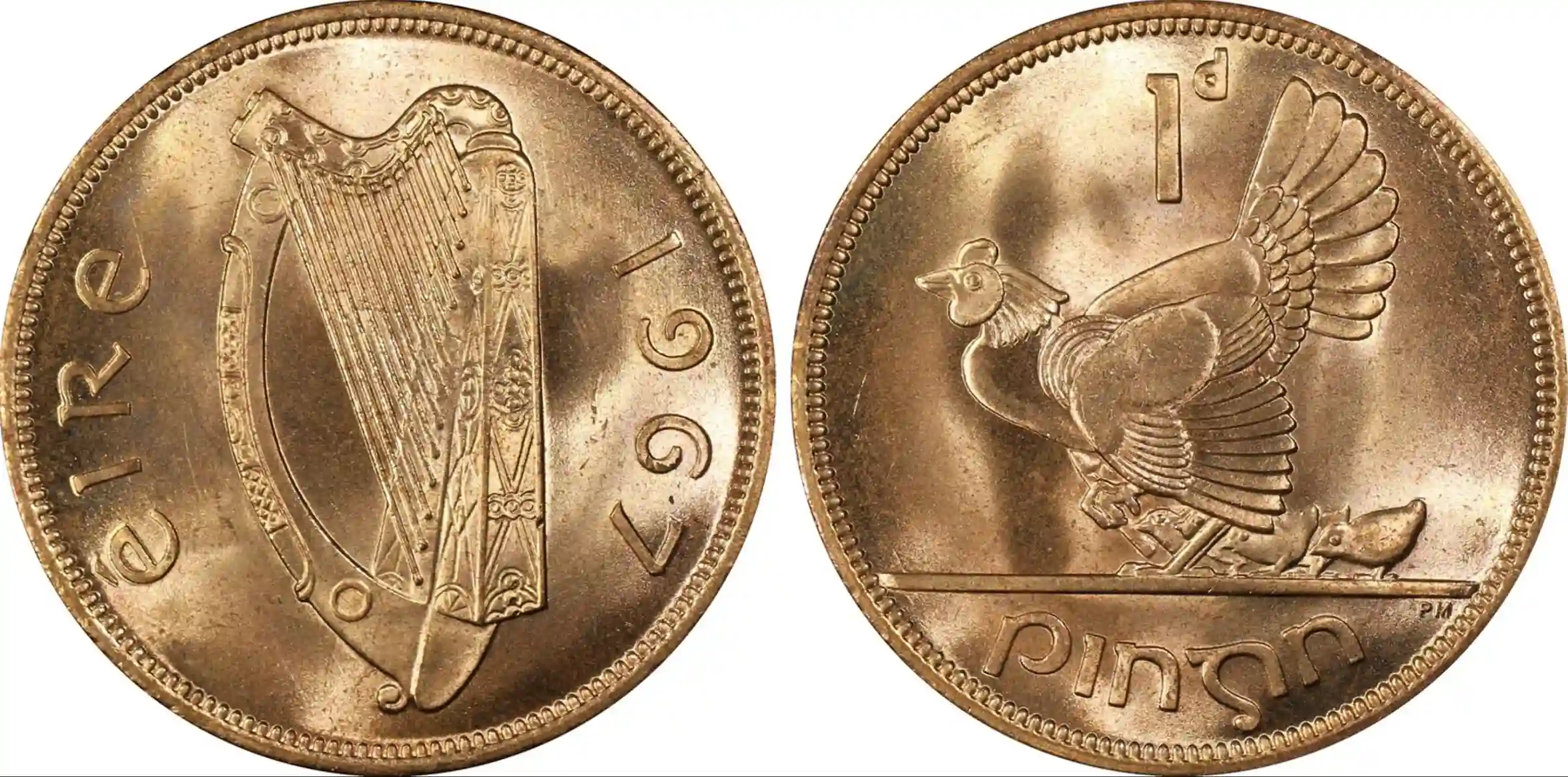
The old Irish issues are worth more than $5 and up to $6,500 for unique varieties, such as a 1938 pattern penny or a 1943 Emergency Issue. Always check the modern numismatic auctions and communities.
Why Old Irish Coins Are Surging in Collector Value
Two reasons why numismatists focus on old Irish coins:
An important part of the worldwide collection
Good investment
The famous Barnyard Series that artist Percy Metcalfe created in the late 1920s. The issue features native Irish animals and commands record prices in corporate auction rooms.
Free State vs. Republic: Decoding the Legends on Your Coins
To use the old Irish coins value list, you should first read the text layers on the obverse side of the coin.
Feature | Free State | Republic |
Time Period | 1928–1937 | 1938–1969 |
Historical Catalyst | First independent currency project of the new nation | Adoption of a new state constitution |
Noteworthy Rarities | Standard initial circulation issues | Highly valuable transition pattern pieces |
Small Denominations | Copper | Copper |
Mid-Tier Denominations | Cupronickel | Cupronickel |
Rarest Dates and Pattern Years
The 1938 penny represents the absolute pinnacle of twentieth-century Irish numismatics. Only two verified pieces exist in the world. When one of these examples enters a public auction space, the final hammer price routinely crosses into five-figure territory.
The 1943 florin occupies a similar position of prestige. World War II caused extreme metal shortages, which forced the government to execute emergency melt orders on large silver reserves.
The Dublin Mint melted nearly the entire production run of 1943 two-shilling pieces before delivery. Only a single bag of 1,000 coins escaped the furnace by mistake.
The 1943 halfcrown shares a parallel survival history. Collectors track these scarce silver pieces across public auction databases and find information on coin-identifier.com.
Irish Coins 1928–1943
From 1928 through 1943, the Irish government struck shillings, florins, and halfcrowns in 75 % pure silver. This high metal purity provides an intrinsic bullion floor price for these denominations.
Specific years within this silver run carry massive collector markups that far exceed raw metal weight. The 1937 halfcrown and the 1939 threepence stand out as crucial dates that draw fierce competition from registry collectors.
Copper and Nickel Base Issues: Farthings to Sixpences
The base metal series covers the lower fractions of Irish change. These coins display iconic wildlife portraits:
The woodcock on the farthing
The hare on the threepence
The pig on the halfpenny
Item Defects
Standard Reverse hen with chicks clearly visible. Chickless Error – missing design details under the hen.
Look closely at the pennies from 1942/1948/1968 to find the famous chickless error. This variety occurred when a filled die or a worn hub left out the small outlines of the chicks beneath the central hen design. Low-mintage anomalies such as the 1940 penny and the 1946 halfpenny yield strong dealer returns.
Value $10–$150+
2026 Irish Coin Value Chart
Denomination | Variety | Value |
Pingin | 1938 Pattern | $45,000 |
Flóirín | 1943 Emergency Issue | $6,500 |
Leathchoróin (Halfcrown) | 1943 Silver Strike | $1,200 |
Leathchoróin (Halfcrown) | 1937 | $150 |
Pingin (Penny) | 1942 Chickless Error | $45 |
The pricing index details realistic market values for pre-decimal and decimal issues, compiled from dealer reports and public auction records.
Decimal Transitions and Modern Rare Varieties
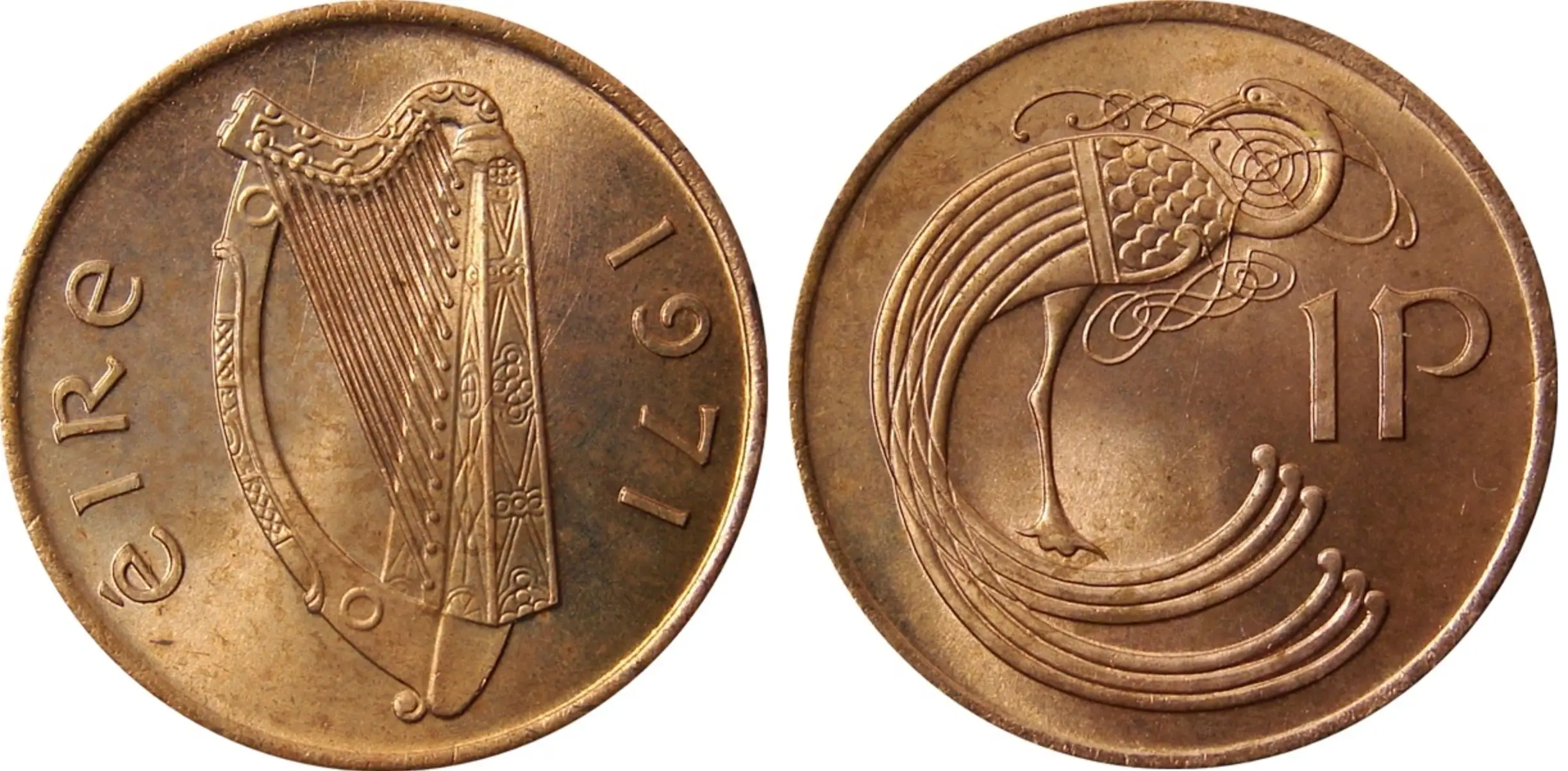
The 1966 Pearse Ten-Shilling Commemorative
In 1966, the Republic of Ireland struck its first modern commemorative coin to mark the 50th anniversary of the Easter Rising. The obverse depicts the profile of revolutionary leader Padraig Pearse. The mint struck over two million of these silver ten-shilling pieces.
You must differentiate between these common coins and the special matte proof versions. The mint prepared a tiny run of matte proof examples for state officials and visiting dignitaries.
Rare Decimal Anomalies (1969–2000)
The transition to decimal currency in 1969 created several major errors that drew intense interest. The 1985 twenty-pence piece error represents a classic production mistake. Mint workers struck a small batch of these coins on cupronickel blanks meant for a different denomination, rather than the correct nickel-brass alloy.
How to Evaluate Your Irish Collection
Step 1 – Preserving the Patina
You must never do these things with old Irish coin:
Scrub
Wipe
Dip
Polish
Abrasive cloths and chemical dips remove the natural tarnish that forms over decades, leaving bright, artificial surfaces that immediately turn off expert buyers. Cleaning a coin destroys its original mint luster and leaves permanent microscopic hairline scratches across the metal fields.
Step 2 – Identify the Coin Rarity
The high market value of top-tier Irish dates attracts deceptive counterfeit operations. Scammers utilize modern technology to cast fake 1943 florins or alter the dates on common pennies to simulate a 1938 pattern. These fakes often match the weight of original coins, which can trick an untrained eye.
Step 3 – Check the Certifications
To safeguard your collection, utilize third-party grading authentication before you attempt a sale. Submitting your high-value candidates to PCGS or NGC removes all doubt regarding authenticity and condition. A certified plastic grade holder solidifies the coin's place in the market and helps you secure full value from prospective buyers.
Maximize the Return on Your Irish Issues
Never guess at the value of your old coins; instead, utilize a verified value list to check every date and error possibility. If your review reveals only common and standard decimal issues, a local coin shop or a direct bullion buyer offers a fast path to cash.
If your audit uncovers certified condition rarities, silver, or issues, skip the local shops. Consign those premium pieces to a specialized online auction platform, where international collectors will compete openly to drive the final payout to its absolute limit.